
Probate House Clearance Clydebank
Probate house clearance in Clydebank demands careful coordination between legal authority, family decisions, and the practical realities of clearing extensive domestic clutter. Sensitive sorting of important belongings from general contents forms the foundation for a successful clearance plan.
Deciding to clear a home after probate can often provoke more questions than answers. In Clydebank, West Dunbartonshire, this decision usually starts with confirming who holds the rightful authority to arrange the clearance. This is rarely straightforward, as executors or estate administrators must carefully navigate the legal documentation before authorising any removal of belongings.
The practical consequence of this initial step is that without explicit authority—usually evidenced by probate or confirmation—any premature clearance risks complicating the estate administration. Executors must be mindful of separating personal, important items such as wills or letters from general household contents, especially when properties have been occupied for decades and accumulated considerable clutter.
Probate House Clearance in Clydebank — What to Consider
Understanding who legally authorises the clearance is a crucial but often complex aspect of managing a probate property in Clydebank. Executors or administrators named in the will or granted legal confirmation have the authority to instruct clearance companies. Without such authority, even family members must refrain from removing possessions to avoid disputes or legal complications.
It is important to check all relevant estate paperwork carefully. Occasionally, multiple executors or beneficiaries will need to agree on the clearance scope, which can delay the process. We always advise clients to confirm documentation before any clearance planning to ensure compliance with estate protocols.
Property Contents and Important Belongings in Clydebank
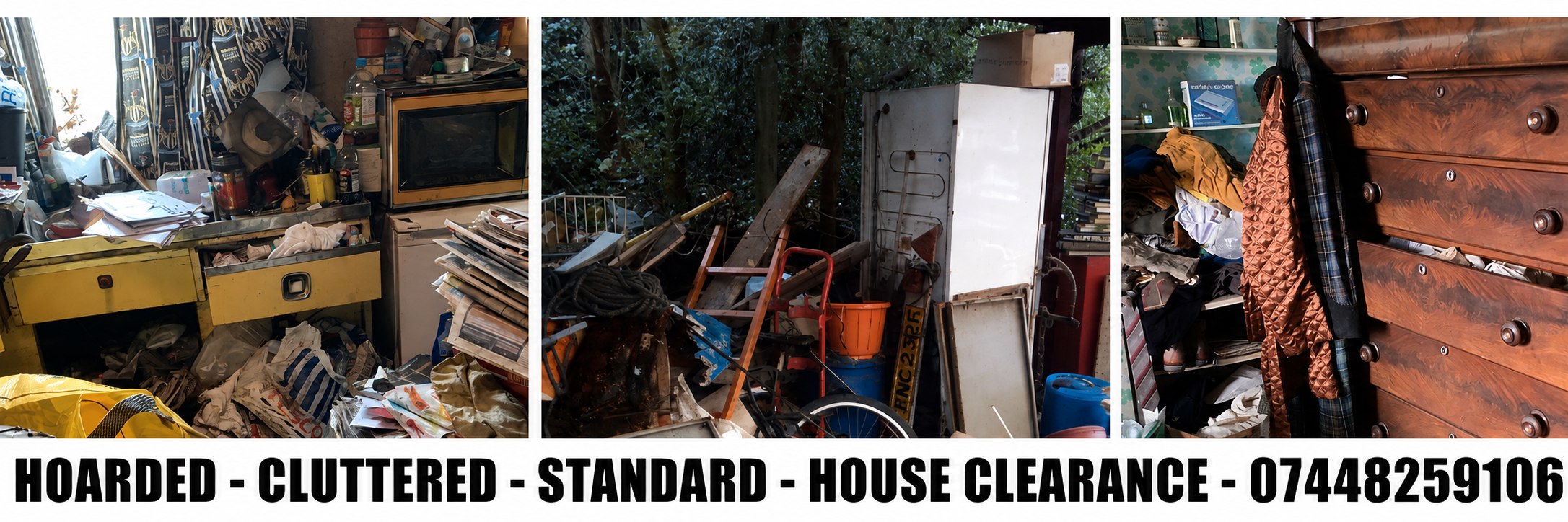
Many homes in Clydebank that require probate clearance are long-occupied, often featuring cupboards stuffed with a mixture of everyday crockery, obsolete appliances, and sometimes decades’ worth of accumulated kitchenware. One typical scene is a large larder cupboard where faded jars, mismatched plates, and an assortment of old kettles and toasters have gathered without clear order.
Such spaces often contain items of mixed significance: some family heirlooms or keepsakes might be tucked away among general clutter, making it essential to carefully sort each section. Garages or sheds attached to the property may similarly hold boxes of unlabelled household goods, adding to the complexity.
Planning Probate House Clearance in Clydebank
When arranging a house clearance quotation, many factors influence the eventual scope and cost. For Clydebank homes, the volume of accumulated contents is a primary consideration. If rooms are densely packed, especially with bulky old furniture or kitchen appliances, the clearance team must allocate additional time and resources.
Access arrangements also weigh heavily in planning. Narrow staircases, limited parking, or the need to coordinate with multiple family members for keys and retained possessions require clear communication. Specialist disposal needs, such as electrical items or hazardous materials, further affect the clearance approach.
Probate House Clearance Case Study — Clydebank
We were approached by an executor residing outside the Clydebank area, tasked with managing a cluttered family home left long unoccupied. The property’s kitchen was particularly challenging, with accumulated crockery, cupboards crammed full of mismatched utensils, and several old appliances requiring specialist disposal considerations. The executor’s first request was to determine which items should be kept for the family and which could be cleared.
Our team discussed the executor’s role in gathering family instructions, emphasising the importance of clear retained-item labelling to avoid misunderstandings. Access was complicated; the only key to the property was held locally by a neighbour, so we coordinated to arrange entry without delay. The narrow stairway and tight kitchen workspace also required careful planning for safe removal of bulky items.
We conducted a room-by-room assessment, focusing on the kitchen cupboards and adjacent storage areas. It became apparent that several boxes stored under the sink contained personal letters and photographs that the executor wished to preserve. Separating these from general clutter was essential before any disposal work commenced.
The executor provided clear guidelines on which items to set aside, including family jewellery and important documents found in a locked drawer. With these parameters, we proposed a clearance plan that accounted for specialist disposal of old appliances and hazardous kitchen waste, while ensuring all retained possessions were securely stored and labelled for collection.
Family Possessions and Decisions in Clydebank
Disagreements over keepsakes are commonplace in probate clearances, especially when family members hold differing views on what should be preserved. In Clydebank properties with extensive domestic clutter, it is practical to implement a retention labelling system that all parties agree on beforehand.
We often recommend grouping personal belongings into clearly marked retention boxes or distinct areas within the property. This approach reduces potential conflicts and ensures treasured items—such as jewellery, documents, and letters—are safeguarded while enabling efficient clearance of non-essential contents.
Probate House Clearance Costs and Quotations in Clydebank
The ultimate clearance price depends on more than just volume. For example, properties with large quantities of accumulated kitchenware and bulky furniture typically require longer working hours. Specialist waste disposal, such as for electrical goods or items containing hazardous materials, adds to the time and cost.
Access challenges in Clydebank, such as limited parking or confined staircases, can increase manpower needs and prolong clearance. Each element is factored into a bespoke quotation that reflects the job’s practical requirements without reliance on arbitrary pricing.
How to Enquire About Probate House Clearance in Clydebank
When making an enquiry for a probate clearance, executors should provide clear evidence of their authority, such as probate documents or letters of administration. Explaining the available access arrangements is equally important, including where keys are kept and any security codes.
Detailing which items or rooms are to be cleared, alongside any that must be retained, helps ensure the quotation and service align with the estate’s needs. Open communication about family decisions and any specialist disposal concerns allows for accurate planning from the outset.
Specialist Probate House Clearance in Clydebank
Probate house clearance in Clydebank faces particular challenges when safeguarding important documents and personal photographs amid significant domestic clutter. These items, often stored in unassuming cupboards or old filing cabinets, require careful handling to avoid accidental disposal. We emphasise early sorting strategies to separate wills, legal paperwork, and precious family albums from general contents before any clearance begins.
Our approach involves close liaison with executors or family members to confirm which documents must remain untouched and to arrange secure storage during the clearance process. Preserving the integrity of personal photographs and correspondence is especially sensitive, demanding clear labelling and sometimes a specialist approach to ensure these items are neither lost nor damaged, even when the surrounding property contains vast quantities of accumulated household goods.
Discuss Probate House Clearance in Clydebank
Effective probate clearance in Clydebank combines accurate verification of executor authority, detailed assessment of property contents, and thoughtful planning around retained items. By focusing on personalised retention and specialist disposal needs, a smooth clearance can be achieved even in homes burdened with decades of accumulated possessions.