
Bereavement House Clearance Clydebank
Bereavement house clearance in Clydebank requires careful sensitivity and detailed planning, particularly when decades of mixed belongings and important documents are involved. Our expertise guides families through complexities around authorisation, contents sorting, and practical access challenges.
In Clydebank, the sensitive nature of bereavement house clearance often begins with an immediate uncertainty: who holds the authority to clear a deceased relative’s home when families have yet to settle on formal executorship? The question becomes pressing when a property, steeped in decades of accumulated belongings, waits quietly for decisions to be made.
Families may find themselves unsure how to approach the delicate task of sorting through possessions that range from everyday clutter to cherished keepsakes, especially when not everyone involved lives locally or can access the property easily. Understanding these initial practicalities can help prepare for a smoother, more respectful clearance process.
Bereavement House Clearance in Clydebank — What to Consider
When a bereavement house clearance is needed in Clydebank, one of the first complexities encountered is identifying who can authorise the removal of household contents. Often, the situation involves executors named in a will, but in many cases, families need time to formally appoint them or resolve competing interests among relatives. This uncertainty can delay clearance efforts, as no one wants to inadvertently dispose of valuable or sentimental items without clear consent.
While we do not give legal advice, we emphasise the importance of having documented instructions or written authorisation before proceeding, especially in properties full of mixed possessions where the risk of removing important belongings is significant. Families can aid the process by gathering any paperwork that indicates executorship or by clarifying who will oversee the clearance.
Property Contents and Important Belongings in Clydebank
Many properties in Clydebank hold decades’ worth of accumulated contents, and frequently we encounter cupboards or attic spaces where personal and non-personal items are jumbled together. For example, an upstairs storage cupboard might contain a filing cabinet overloaded with paperwork, alongside a pile of well-worn sofas and bookshelves filled with miscellaneous items.
These mixed collections often obscure which objects are important keepsakes—such as family photographs or wills—and which are suitable for disposal. The challenge lies in carefully distinguishing sentimental or potentially vital documents from everyday household possessions before any removal can occur.
Planning Bereavement House Clearance in Clydebank
The planning stage of a house clearance in Clydebank takes into account many factors beyond just the volume of items. Accessibility to the property, such as narrow staircases or limited parking outside, can influence how we approach the clearance and labour required. Similarly, whether garages, sheds or attic spaces are included affects the scale and resources needed.
Furthermore, clients’ instructions regarding personal items to be retained or set aside heavily shape the job’s scope. Our quotations therefore reflect not only the quantity and nature of belongings but also logistical challenges and the degree of sorting and care required.
Bereavement House Clearance Case Study — Clydebank
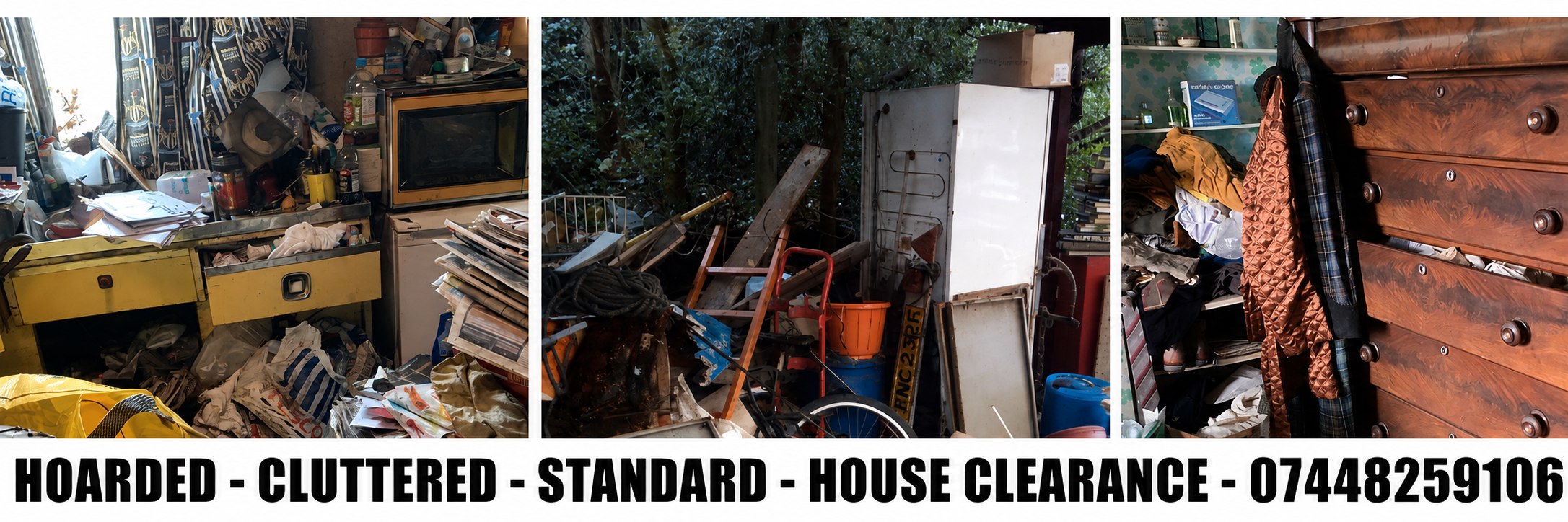
We once worked with a distant executor tasked with coordinating a bereavement clearance for a property in Clydebank belonging to a relative who had lived there for over fifty years. The house was crammed with heavy, outdated furniture, overflowing filing cabinets, and a labyrinth of shelves covered in layers of dusty documents.
Our first step was to liaise directly with the executor, who was based several hours away, to clarify the family’s wishes regarding retention of certain personal items, including named wills and cherished photographs. Given the executor’s absence, we agreed a system of detailed labelling for any items set aside before disposal.
Upon visiting the property, we found a particular set of filing cabinets containing decades of correspondence and legal papers, mixed indiscriminately with general clutter. This required careful sorting, with a focus on extracting paperwork related to wills and financial documents. The bulky sofas and surplus shelving units elsewhere in the house were identified for removal but scheduled after the document separation.
Thanks to this methodical approach, we were able to provide the executor with comprehensive photos and lists of retained items to share with family members. The clearance proceeded only once all parties confirmed the set-aside possessions, ensuring no important keepsakes were lost amidst the bulky household removal.
Family Possessions and Decisions in Clydebank
Before any clearance can begin, it’s essential to thoroughly check attics, cupboards and storage areas for important correspondence, family photographs and, critically, any wills or legal documents. These can easily be buried under household clutter or kept inside apparently insignificant boxes or folders.
We always recommend families take the time to identify and retrieve such items or instruct their clearance team explicitly on what to retain. This not only respects the memory of the deceased but also supports executors and relatives in managing the estate responsibly and sensitively.
Bereavement House Clearance Costs and Quotations in Clydebank
Clearance pricing is influenced significantly by the size and complexity of the property’s contents in Clydebank. Additional rooms, garages or garden sheds add physical volume and require extra effort to clear safely, often increasing the overall cost.
The agreed scope of work is paramount: including or excluding outbuildings or loft spaces directly affects the time and resources involved. Transparent discussions early on help avoid surprises and ensure families understand how these practical factors shape the final clearance arrangement.
How to Enquire About Bereavement House Clearance in Clydebank
When making an initial enquiry about a cluttered house clearance, including in areas like Clydebank, providing as much detail as possible is invaluable. This includes the number of rooms and outbuildings, the types of contents stored (such as boxes of paperwork, furniture, or personal belongings), and any known special requirements—for example, whether certain keepsakes must be retained or if keys and access arrangements are in place.
Photos or videos can be especially helpful when family members cannot visit the property themselves. Clear communication about what the family expects from the clearance supports an accurate assessment and a quotation that reflects practical realities.
Specialist Bereavement House Clearance in Clydebank
In Clydebank properties where paperwork and personal belongings are densely interwoven, a frequent challenge arises when filing cabinets or shelving units contain both important family documents and general clutter. Separating these items requires not only care but also a methodical approach to labelling and recording retained possessions, especially when the executor or family members are not local. We often find that without a clear system, there is a risk of discarding valuable correspondence or sentimental items alongside typical household rubbish.
A useful next step in such sensitive clearances involves setting up a coordinated communication channel with the family executor or appointed contact. Sharing images and lists of items identified for retention ensures transparency and allows family members to make informed decisions remotely. This approach reduces the chance of misunderstandings and supports a clearance process that is both efficient and respectful.
Discuss Bereavement House Clearance in Clydebank
Success in bereavement house clearance hinges on co-ordinated family communication, thorough identification of personal keepsakes, and realistic planning around property scope. In Clydebank, understanding these factors can ease the emotional and practical burden on grieving relatives.