
Probate House Clearance Wakefield
Probate house clearance in Wakefield requires detailed understanding of property contents, executor authority, and careful planning to safeguard important documents and cherished belongings amid cluttered estates.
When executors or family representatives step into a Wakefield home filled with decades of accumulated belongings, uncertainty often arises around ownership and what should be retained or cleared. The presence of personal papers mingled with household clutter can complicate decisions, making a measured approach essential to avoid discarding vital documents or treasured keepsakes.
Preparing for a probate clearance in West Yorkshire involves more than just removing items; it means respecting the legal authority of an executor, understanding the scope of the estate, and ensuring that important possessions such as family photographs, wills, or jewellery are carefully identified. Knowing how to realistically outline the scale of the task before requesting professional support can streamline the process and safeguard valuables.
Probate House Clearance in Wakefield — What to Consider
A relative or executor assessing a Wakefield property for probate clearance must begin by offering a clear description of the volume and nature of the contents. Instead of vague terms like ‘a lot of clutter’, they could specify whether the house contains several rooms with stored belongings, a loft filled with boxes, or outdoor sheds with accumulated items. This practical detail ensures that quotations reflect the true scale without surprises when the clearance begins.
Providing an honest appraisal, including any known challenges such as narrow staircases, parking restrictions, or restricted access, helps professionals prepare accurately. Such upfront information can lead to more precise scheduling, staff allocation, and equipment needs, all contributing to a smoother clearance process.
Property Contents and Important Belongings in Wakefield
The contents of a probate property in Wakefield often range widely, from old furniture and domestic appliances to delicate family ornaments and jewellery. Some items may be designated for donation or resale if the family wishes, while others might be earmarked for retention based on sentimental or legal importance. No clearance can assume that all contents will be discarded without careful communication with the executor or next of kin.
Areas like garages, sheds, and loft spaces commonly harbour long-forgotten possessions that might be useful to the family or require special disposal. Clarifying early on which spaces are included in the clearance helps avoid overlooked items and unnecessary work, respecting the family’s wishes and the estate’s value.
Planning Probate House Clearance in Wakefield
Planning a probate house clearance remotely requires clear, documented instructions from the executor or authorised family member. Such guidance should outline whether a full or partial clearance is requested, which rooms or storage areas are to be addressed, and any items to be set aside. This ensures that the process respects legal authority and the family’s intentions.
Arrangements regarding keys and property access must be confirmed well in advance, including any parking considerations for removal vehicles. Where executors live outside Wakefield or are unavailable in person, written authorisation and detailed instructions become even more crucial to avoid missteps.
Probate House Clearance Case Study — Wakefield
We were approached with an enquiry about a Wakefield property where the executor lived abroad and access was limited to a single set of keys deposited with a trusted neighbour. The house contained personal papers mixed with household items, including jewellery boxes and family ornaments, but the executor was unsure which belongings were to be retained or discarded.
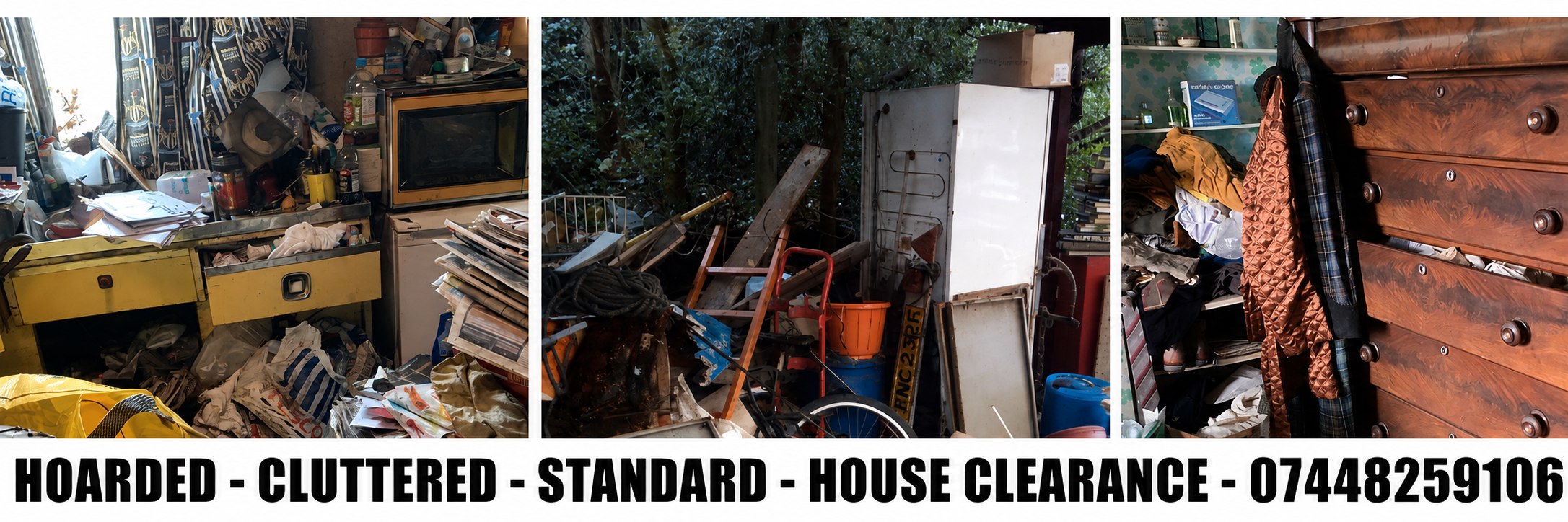
Beginning with a room-by-room survey, we documented contents and identified items clearly labelled as retained by the family. The garage and loft space presented additional challenges due to poor lighting and cramped storage, requiring extra care in sorting and disposal planning.
Faced with uncertainty over disposal authorisation, we coordinated closely with the executor via email and telephone, sharing images and lists of potentially important documents and valuables. This collaboration ensured no items were inadvertently removed against instructions.
The sequence of assessment led to a staged clearance plan: first securing and segregating items for retention, then systematically removing agreed rubbish and unwanted furniture. This measured approach balanced the restriction of access, the need for executor approval, and practical clearance timelines.
Family Possessions and Decisions in Wakefield
Before any clearance begins, it is vital to check for important correspondence and documents that may be mixed with everyday household goods. Wills, bank statements, and official paperwork often hide in drawers, filing cabinets, or among keepsake boxes. Locating these early reduces the risk of accidental disposal.
Jewellery and family photographs also warrant careful attention. Labelled retained items should be clearly separated and recorded, allowing families to secure sentimental possessions and avoid distressing losses that cannot be replaced.
Probate House Clearance Costs and Quotations in Wakefield
The pricing of probate house clearance work in Wakefield can be influenced significantly by the number of rooms or additional outbuildings such as sheds and garages included in the scope. Each extra storage area requires time and resources, potentially increasing labour costs and disposal fees.
Clear scope definition at the outset helps control costs. If the family opts for a partial clearance focusing only on certain rooms or areas, this can reduce the overall price, but executors should be clear about which spaces are excluded to avoid misunderstandings later.
How to Enquire About Probate House Clearance in Wakefield
When making an initial enquiry into clearing a cluttered house for probate in Wakefield, it helps to include details such as the property’s approximate size, number of rooms, and specific storage areas like lofts or outbuildings. Noting any potential access issues, such as limited parking or narrow entryways, also informs the feasibility assessment.
Information about executors’ authority, including whether instructions will be given remotely or in person, assists in scheduling and communication planning. Mentioning if any important items are known to be retained enables a tailored service that honours family wishes.
Specialist Probate House Clearance in Wakefield
House clearance under probate in Wakefield can present practical challenges, especially when personal papers are deeply intertwined with household contents. One such challenge arises when the property contains multiple layers of storage—such as a loft piled with boxes, a garage cluttered with forgotten tools, and cupboards filled with family photographs and jewellery—yet access is restricted to limited visits due to keys being held remotely. In these cases, prioritising a room-by-room approach is essential to avoid missing vital documents or keepsakes. We recommend a staged clearance plan beginning with identifying and labelling retained items, followed by methodical disposal, always with executor approval guiding the process.
Another difficulty lies in balancing the need for thorough clearance with the risk of disposing of items that may have legal or sentimental significance. For instance, paperwork relating to the deceased’s estate—like wills or insurance documents—may be mixed with everyday clutter, making it easy to overlook. Establishing a check-list with the executor and requesting clear instructions on retained possessions mitigates this risk, while clear photographic records support accountability. Strategic planning ensures that clearance in Wakefield respects both the family’s desires and the legal responsibilities inherent in probate work.
Discuss Probate House Clearance in Wakefield
Effective probate clearance in Wakefield hinges on early organisation, clear communication with executors, and a methodical approach to sorting personal possessions and household contents, ensuring that valuable documents and keepsakes are preserved throughout the process.