
Probate House Clearance Ashington
Managing probate house clearance in Ashington demands a nuanced approach that blends clear authority, detailed planning, and sensitive handling of accumulated household items, especially in long-occupied kitchens filled with a mixture of everyday objects and cherished belongings.
An executor’s first significant decision often revolves around confirming who holds authority to begin clearing the contents of a probate property. In Ashington, where homes may have been long-inhabited by the deceased, this question is more than formal—it sets the tone for the entire clearance process and impacts timelines for sale preparations.
Once the legal authority is established or guidance sought, the practical challenge is to manage years’ worth of accumulated household items, particularly in essential rooms like the kitchen. Balancing careful item retention with efficient disposal requires detailed planning and a sensitive approach that respects both the deceased’s legacy and the family’s wishes.
Probate House Clearance in Ashington — What to Consider
Understanding precisely who can authorise the removal of possessions from a deceased’s property is fundamental but often unclear without legal documentation. Executors named in a will or administrators appointed by probate courts generally hold the responsibility to authorise clearance, but each estate’s paperwork and family circumstances differ.
While we do not offer legal advice, it is vital for anyone involved to ensure that clear authority exists before proceeding with clearance tasks. This avoids disputes or complications that could delay the sale of the Ashington property or jeopardise the respectful handling of belongings.
Property Contents and Important Belongings in Ashington
In properties with extensive history, cupboards and attics often harbour a mixture of items—some of sentimental or financial value, others simply clutter. For instance, in a kitchen cupboard, crockery might be piled alongside outdated appliances and household cleaners, creating a patchwork of everyday use items and potential waste.
Locally, old kitchen contents can include everything from ceramic teapots collected over decades to obsolete bread bins and a motley of jars. Sorting such mixed contents demands time and care, especially when some items need to be set aside for family retention while others require suitable disposal.
Planning Probate House Clearance in Ashington
When planning a probate house clearance, several factors shape the quote that clients receive. The sheer volume of accumulated items, particularly bulky or hazardous waste, significantly influences the cost and timescales involved.
Access complications, such as narrow staircases or detached garages storing additional clutter, also affect the planning. Partial-clearance requests where families wish to retain certain belongings necessitate careful labelling and room-by-room assessments, all contributing to the overall project scope and pricing.
Probate House Clearance Case Study — Ashington
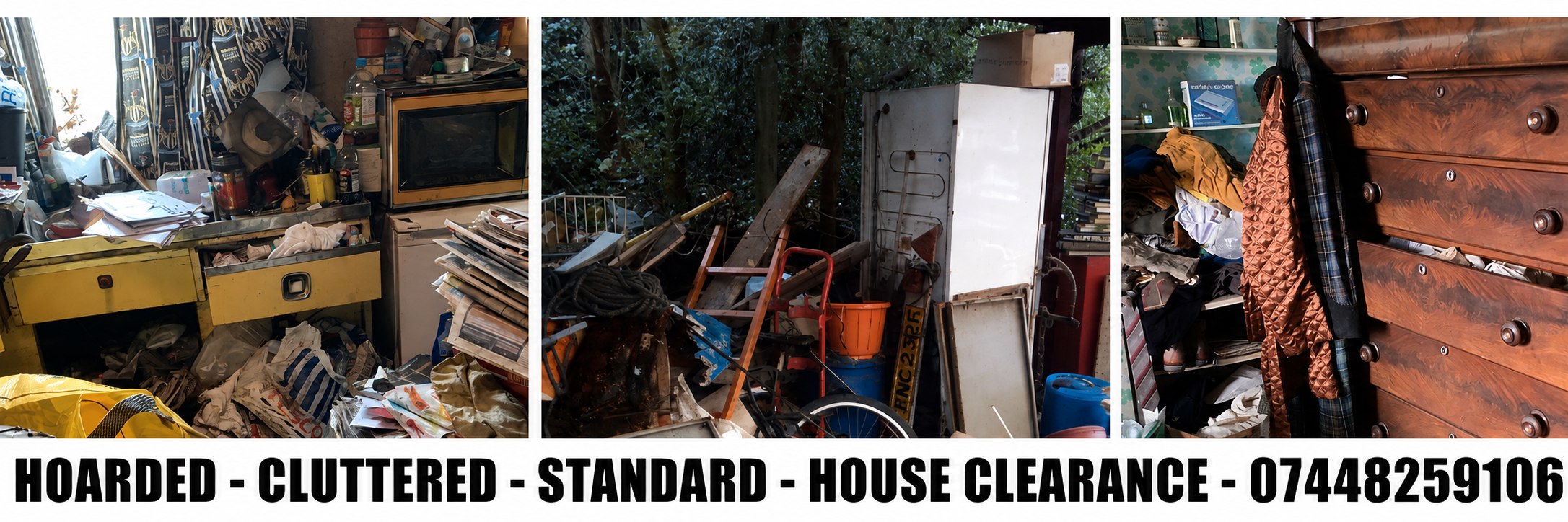
We were recently approached remotely by an executor managing an inherited Ashington property long occupied by the deceased. The house contained a particularly cluttered kitchen packed with accumulated crockery, old cupboards crammed with miscellaneous household goods, and several outdated appliances.
Our first challenge was establishing clear access arrangements since the executor lived out of the area and held spare keys. We coordinated with a local contact to confirm entry and conducted a detailed remote briefing to map out the property’s contents before visiting.
During our assessment, it became clear that the quantity of kitchen contents was larger than initially expected, complicated by the presence of some specialist waste such as old cooking oil and electronic appliance components requiring separate disposal procedures. We advised the executor on staging the clearance to prioritise usable or important items.
We then outlined a plan incorporating family instructions to retain certain personal effects, labelling these carefully to avoid accidental removal. Our proposal balanced thorough clearance with sensitivity to the executor’s timescale for preparing the property for sale, recommending interim storage for retained possessions to facilitate flexibility.
Family Possessions and Decisions in Ashington
Family disagreements over which jewellery, personal letters or keepsakes to preserve are a common hurdle in probate clearances. Grouping these items in clearly labelled retention boxes or zones within the property helps prevent misplacement during clearance.
Using agreed labels with executor input allows us to separate important belongings from general household contents efficiently. This approach reduces conflict and ensures that treasured possessions remain accessible and protected throughout the removal process.
Probate House Clearance Costs and Quotations in Ashington
Several practical elements influence clearance pricing, including the volume of items, ease of access, and whether specialist waste disposal is required. A property with multiple storage areas like sheds or garages adds complexity and time to the job.
Time on site is also affected by the necessity to work around family visits or partial-clearance requests. Such factors mean that quotes must be tailored to each property’s situation rather than relying on flat rates or assumptions.
How to Enquire About Probate House Clearance in Ashington
When making an enquiry, it is helpful for executors to clearly explain their authority, providing copies of relevant probate or will documentation where possible. Details about key holders and entry arrangements streamline planning and avoid delays.
Clear instructions about which possessions should be retained are equally important. Early communication about such requirements ensures that the clearance proceeds smoothly and that no cherished items are inadvertently disposed of.
Specialist Probate House Clearance in Ashington
Probate house clearance in Ashington often involves safeguarding sensitive documents, such as wills, letters, and photographs, which may be stored in various locations around the property, including locked drawers or atop kitchen cupboards. Deciding how best to protect these items requires consultation with the family or executors to establish secure packaging and storage during clearance operations.
Separating personal photographs and confidential documents from general contents can be challenging when they are mixed among clutter in cupboards or alongside old appliances. Specialist clearance processes include careful identification and handling of such materials to prevent loss or damage, respecting the privacy and sentimental value attached to them.
Discuss Probate House Clearance in Ashington
Each probate clearance in Ashington brings a unique set of practical challenges—from verifying legal authority to sorting decades of household contents with family input. Thoughtful planning and clear communication ensure the process supports timely property sales while honouring the memory of the deceased.