
Bereavement House Clearance Consett
Clearing a bereaved family home in Consett involves delicate decisions about cherished keepsakes and practical challenges of bulky furniture, access, and disposal. A well-planned approach respecting family wishes makes the process more manageable.
Deciding which items to retain when clearing a property after a bereavement in Consett often presents one of the earliest and most sensitive challenges. Families must separate cherished mementos from everyday belongings, a choice that shapes the entire house clearance process. Recognising the emotional and practical consequences of these decisions helps structure a clearance plan that honours personal wishes while preparing the home for sale or reoccupation.
Once the family agrees on which possessions will be kept, it becomes easier to assess the full scope of the clearance. This clarity not only informs an accurate quote but also streamlines the practical arrangements, especially in properties where access and bulky furniture require careful handling. Sensitive navigation of these early stages can make what is often a difficult time considerably more manageable.
Bereavement House Clearance in Consett — What to Consider
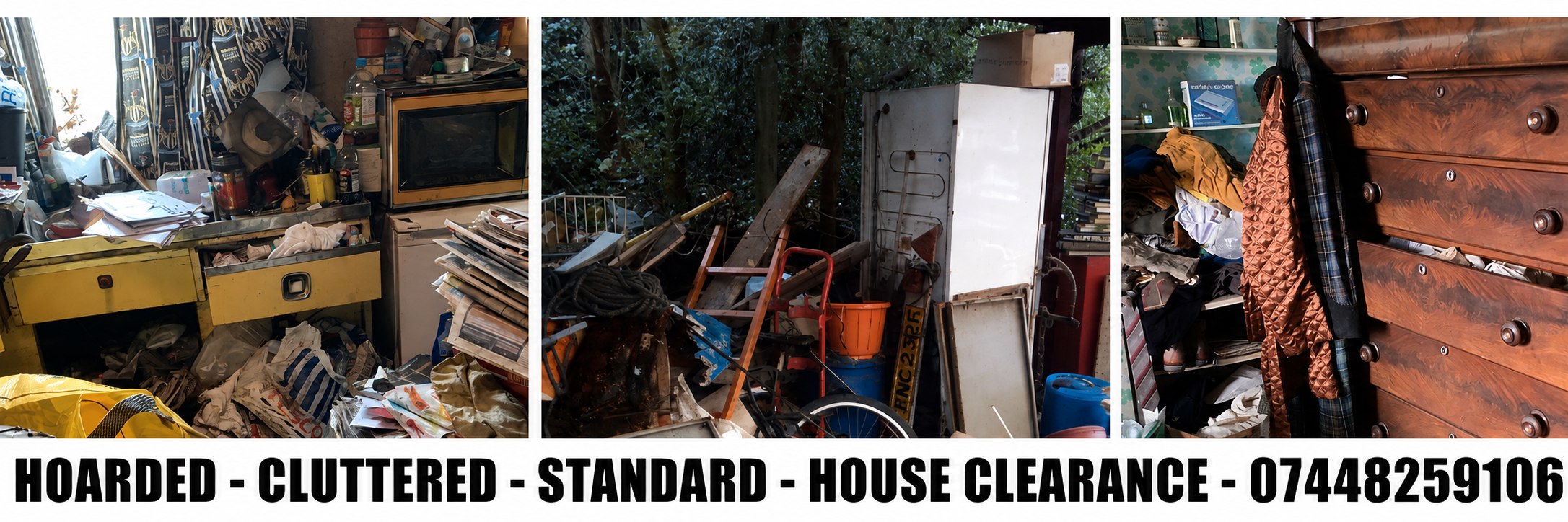
When preparing to clear a bereaved relative’s home in Consett, it is helpful if a family member can realistically describe the clutter level. This might include noting whether the property contains accumulated cartons in the loft, furniture left untouched in living spaces, or garages filled with miscellaneous items. A candid description enables us to provide an early assessment of the work involved and whether a more detailed survey is necessary.
We often find that relatives underestimate the volume or complexity of clearance required. Providing practical details such as the presence of multiple staircases, narrow corridors, or difficult parking helps us foresee logistical challenges. A straightforward outline of the property’s general condition and contents leads to a better-informed, no-obligation quotation.
Property Contents and Important Belongings in Consett
Large or bulky property contents can become focal points in clearance discussions. For example, an oversized oak wardrobe occupying much of a bedroom may be classed separately from general household refuse. Whether it remains part of the clearance depends on family wishes and the condition of the item.
Sometimes, curtains and soft furnishings present a dilemma—should they be included or left in place for sale or new occupants? In one recent enquiry, a loft packed with stacked cartons also contained old lampshades and unused furniture covers, which family members wanted assessed individually for potential retention or disposal. Careful categorisation from the outset helps define the clearance scope.
Planning Bereavement House Clearance in Consett
Frequently, we are working with instructions from remote executors or relatives who have power of attorney but cannot attend the property. Establishing clear communication channels and confirming authority to act is vital before any clearance begins.
Agreed instructions typically cover what items are to be retained, if any, and the extent of clearance on a room-by-room basis. For properties where sentimental possessions are carefully labelled to avoid confusion, we rely on these details to segregate keepers from disposables. This planning phase emphasises transparency and collaboration.
Bereavement House Clearance Case Study — Consett
We encountered a situation involving a detached two-bedroom house in Consett where the family wanted to prepare the dwelling for sale following a parent’s passing. The property’s interior was heavily furnished, with curtains and carpets still in place, and the loft packed with tightly stacked cartons from decades of storage. Narrow staircases and limited parking outside the street meant we had to consider careful manoeuvring.
An early complication arose regarding access: the executor, living abroad, had authorised clearance but could only provide keys via a third party. Coordinating precise entry times and key handovers required detailed planning to minimise delays. Meanwhile, the family flagged several boxes of family photographs and personal letters that must be set aside.
We arranged to split the clearance into phases, first removing unwanted furniture and bulky items from the ground floor. After inspecting the loft’s contents remotely via photographs sent by the family, we advised on which boxes seemed primarily sentimental keepsakes and which could be safely cleared. This step avoided accidental disposal of irreplaceable items.
Ultimately, the clearance proceeded according to the agreed scope, respecting all instructions about possessions to retain. The family appreciated having the property swiftly made ready for market while ensuring treasured belongings were preserved and delivered to their custody.
Family Possessions and Decisions in Consett
Disputes over personal possessions can add emotional complexity to an already demanding clearance. In a bereavement context, we have found that categorising items with labelled retention groups helps clarify which objects are earmarked for family members or executors and which are destined for disposal.
Personal letters, wills, and family photographs often require special handling and sometimes secure storage before the clearance begins. We recommend early discussions among relatives to avoid last-minute disagreements. Having clear lists or marked boxes can prevent distress caused by accidentally discarding keepsakes that carry significant sentimental value.
Bereavement House Clearance Costs and Quotations in Consett
Clearance costs frequently hinge on identifying specialist disposal items, such as electrical goods or certain furniture requiring separate treatment. Knowing these components upfront influences the accuracy of quotations and prevents unexpected charges.
In one case, we advised a family how an old gas cooker and a worn sofa set would be processed differently, each attracting specific disposal fees or recycling requirements. This transparency helps clients budget realistically and ensures the clearance proceeds smoothly on the day.
How to Enquire About Bereavement House Clearance in Consett
Executors making an enquiry benefit from clearly stating their authority and providing details about property access, including keys and parking arrangements. Confirming any retained items and whether they require separate collection or storage is also crucial.
Providing a room-by-room overview and listing any obstacles—like tight staircases or fragile furniture—allows us to tailor a suitable clearance plan. Where executors are remote, establishing a reliable point of contact on site helps keep communication streamlined throughout the process.
Specialist Bereavement House Clearance in Consett
A frequent challenge in bereavement clearances within Consett involves families confirming the boundary between items to be cleared and those left untouched. One family explicitly wished to leave a selection of heirloom furniture and treasured paintings untouched within the sitting room, while clearing all other rooms and loft storage. Establishing these clear parameters early ensured the work proceeded without confusion or delay, respecting sentimental boundaries while achieving practical clearance goals.
Furthermore, when belongings are stored in garages or sheds adjacent to the property, families sometimes prefer these spaces be excluded from the main clearance. We find it essential to document such exclusions comprehensively to avoid misunderstandings. Clear labelling, combined with family sign-off on the scope, protects all parties and facilitates a respectful and efficient bereavement clearance.
Discuss Bereavement House Clearance in Consett
Bereavement house clearance in Consett demands a balance between emotional sensitivity and logistical precision. Careful planning, clear communication, and respect for personal belongings ensure the home is prepared thoughtfully for its next chapter.