
Bereavement House Clearance Bainsford
Bereavement house clearance in Bainsford involves intricate decisions around accumulated kitchen contents and personal keepsakes, demanding careful planning and sensitive handling to honour family wishes while managing practical obstacles.
Within a property, the variety of objects often dictates how each item must be approached and handled during a bereavement clearance. A kitchen stacked with years of crockery, aging appliances, and cupboards brimming with miscellaneous utensils demands a different method than personal letters tucked inside drawers or carefully stored jewellery boxes. The contrast between practical household goods and treasured keepsakes requires clear identification and thoughtful management to avoid losing or discarding important belongings.
In Bainsford, Falkirk, many longstanding homes accumulate domestic clutter that can challenge relatives undertaking clearance after a bereavement. Understanding the nature of the contents and the family’s wishes around retention versus disposal is essential at the outset, as is planning access to often-complicated layouts. This careful attention to detail helps ensure a respectful, thorough process that honours the property’s past and its occupants.
Bereavement House Clearance in Bainsford — What to Consider
When a relative approaches us with a bereavement clearance enquiry, they often provide an initial description of the property’s condition and scale of clutter based on their own observations. In many cases, a long-occupied home like those in Bainsford can present accumulated household items that have built up over decades. Asking for a realistic account of the quantity and type of contents helps us prepare a more accurate quote and offers clarity on what to expect during the clearance.
This early stage benefits from a tangible sense of scale: whether the kitchen cupboards are overflowing with old crockery and appliances, or if the rooms contain furniture that’s no longer used. Descriptions highlighting specific challenges — such as narrow staircases or restricted entry points — also guide how we plan our approach, ensuring no surprises on the day and reducing the risk of underestimating the clearance effort.
Property Contents and Important Belongings in Bainsford
Not all property contents are treated equally when it comes to disposal or retention. In many bereavement clearances, certain items may be suitable for donation, others earmarked for disposal, and some treasured belongings retained by family members. For example, in a home with a cluttered kitchen, some old yet functional utensils or appliances might find new use through local charities, while worn-out furniture is destined for waste removal.
We never promise outcomes beyond what is feasible, especially without prior inspection. Nonetheless, cupboards stuffed with everyday crockery and unremarkable domestic goods tend to be cleared more straightforwardly than a collection of personal letters or jewellery, which require careful separation and handling. Each clearance involves assessing the property's contents room by room, weighing their condition and family instructions.
Planning Bereavement House Clearance in Bainsford
Planning the clearance is often a dialogue with an executor or relative who may be handling matters remotely, sometimes from outside Falkirk. Confirming precise instructions before arrival is crucial — including which rooms or cupboards to clear fully, any items to set aside, and how to access the property safely. These discussions also cover obtaining keys, managing stairs or narrow passageways inside the home, and agreeing on the sequence of clearance tasks.
The executor’s authority to make decisions on retention or disposal must be clearly documented, ensuring our team can operate without delay. When families provide labelled boxes of retained items or detailed notes on treasured pieces, it streamlines the process and helps avoid accidental discards. Regular communication ahead of the clearance day facilitates a smooth operation tailored to the household’s unique situation.
Bereavement House Clearance Case Study — Bainsford
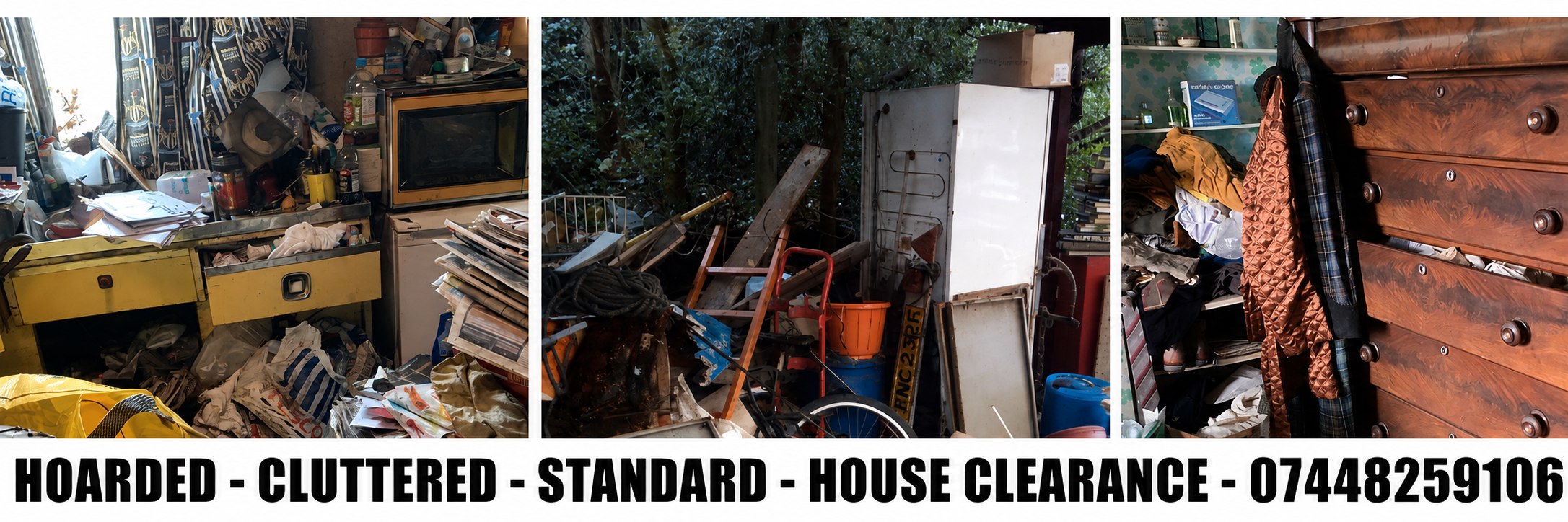
We were contacted regarding a large kitchen clearance in a Bainsford property long occupied by the same family, where years of accumulated crockery, dated appliances, and cupboards packed to capacity awaited sorting. The property presented logistical challenges: narrow entry through a side door and a flight of stairs hampered easy movement of bulky items. The executor, living abroad, provided limited access instructions and stipulated that some jewellery and documents found in the kitchen drawers must be retained.
During our initial assessment, we identified that the sheer volume of kitchen goods exceeded typical domestic clearances, necessitating specialist waste disposal for some obsolete appliances. The presence of personal papers mixed in with crockery demanded a cautious approach to avoid discarding important documents inadvertently. We agreed with the executor on a room-by-room clearance plan, prioritising areas with sensitive contents first.
The team labelled all boxes and bags containing potential keepsakes or paperwork, separating them from general rubbish and recyclable materials. Access constraints meant that bulky furniture removal had to be suspended until stair clearance progressed, so we sequenced tasks to clear stairwells early. This careful scheduling ensured that the clearance could proceed without delays, even with a partial clearance instruction covering only the kitchen and adjacent storage spaces.
Ultimately, our methodical approach facilitated a comprehensive yet respectful clearance aligned with the executor’s wishes. Items identified as family heirlooms remained securely retained and labelled for later collection. Obsolete kitchen appliances were handled via specialist disposal, while crockery and smaller items were evaluated for donation or clearance. The restricted access and volume complexities made it a challenging but manageable operation, setting a practical template for similar Bainsford properties.
Family Possessions and Decisions in Bainsford
Disagreements over family keepsakes often arise in bereavement clearances, especially when valuable items such as jewellery or personal letters are found among everyday household goods. In such circumstances, labelling retained items by agreed groups provides clarity and minimises disputes. Assigning boxes or marked containers to specific relatives or purposes helps create a transparent system that respects all sentiments involved.
When wills or documented instructions are absent or unclear, communication between executors and relatives becomes even more vital. Our team facilitates this by carefully segregating personal belongings from general contents and ensuring sensitive items receive extra attention. This practical retention method not only protects treasured possessions but also enables the clearance to proceed with confidence that important items remain safeguarded.
Bereavement House Clearance Costs and Quotations in Bainsford
Clearance pricing naturally reflects the quantity of contents to remove, the complexity of access, and any specialist disposal requirements — such as dealing with outdated electrical appliances or hazardous waste. Time taken is also a significant factor; stair navigation, narrow doorframes, or the need to handle and catalogue retained items extends labour hours and influences the overall quote.
We always provide no-obligation estimates based on the client’s description and any available photos, adjusting for practicalities such as partial clearance instructions or the necessity to sort through mixed household and personal items. Our transparent pricing policy allows families and executors in Bainsford to plan financially while appreciating the nuances inherent in a bereavement clearance.
How to Enquire About Bereavement House Clearance in Bainsford
When arranging an enquiry, executors are advised to clearly establish their authority and provide any necessary documentation, such as probate papers or letters of administration, to confirm they can instruct a clearance. Confirming access arrangements upfront — including keys or alarm codes — helps avoid delays during the operation.
It is also helpful for the executor to specify any items needing retention, ideally with labelling or written instructions, ahead of the clearance date. This preparation aids our team in respecting the family’s wishes and managing the clearance efficiently. Even when enquiries come from outside Bainsford, clear communication enables us to deliver a tailored service that meets both practical and sentimental needs.
Specialist Bereavement House Clearance in Bainsford
House clearance following a bereavement in Bainsford frequently reveals a complex mix of household clutter and deeply personal possessions. Among these, important documents such as wills, personal letters, and photographs demand distinct care. Unlike other contents that can be cleared rapidly or recycled, these items often require dedicated sorting, protection, and sometimes secure storage pending family decisions. Separating paperwork from general rubbish at an early stage mitigates the risk of loss during clearance.
Photographic archives and family albums, sometimes found tucked away in kitchen drawers or cupboards, also present challenges. In the absence of explicit instructions, we recommend grouping them separately and notifying executors or relatives for review. This cautious approach ensures that valuable memories remain intact and respected, even amid the practical necessities of clearing extensive kitchens or cluttered domestic spaces.
Discuss Bereavement House Clearance in Bainsford
Every bereavement clearance in Bainsford calls for a tailored approach that balances thoroughness with empathy, recognising the practical challenges posed by cluttered long-occupied homes and the significance of preserving treasured documents and jewellery.